



Este sitio web utiliza cookies, puede ver nuestra política de cookies aquí.
Si continua navegando, las está aceptando.
What is hemianopia?
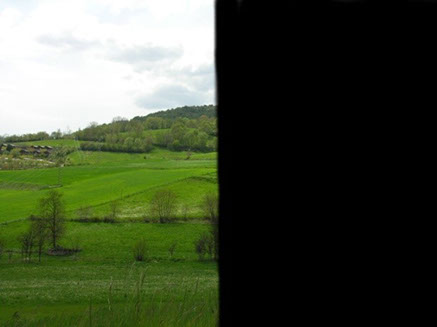
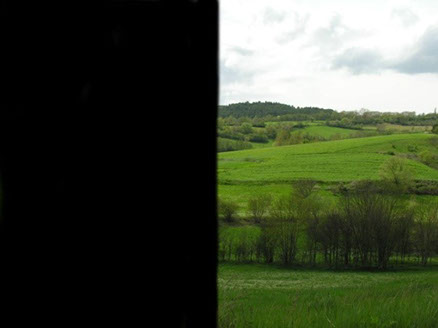
Complete homonymous hemianopias are disorders characterized by a reduction in the right or left visual field.
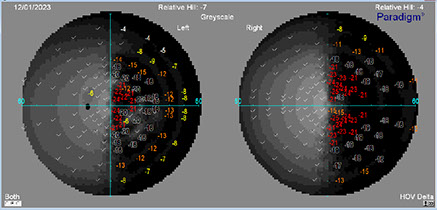
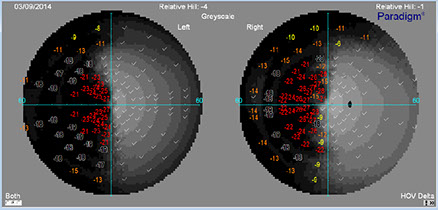
In the case of a right homonymous hemianopia, the field will be reduced to the left half. In the case of a left homonymous hemianopia, it will be reduced to having perception on the right half of the visual field only.
For a homonymous hemianopia-type field loss to occur, the patient will have suffered a brain injury located at the retrochiasmatic level. The visual field alteration will always depend on the degree and location of the lesion that caused the stroke. If the lesion is located on the left side, the right visual field will be affected, resulting in right homonymous hemianopia. And if the retrochiasmatic lesion is located on the right side, the left visual field will be affected, resulting in complete left homonymous hemianopia.
What problems do hemianopias cause?
Although patients with homonymous hemianopia may give signs of visual acuity of the unit, they are often unable to walk alone or find their way around because the loss of visual field causes greater difficulties than those caused by a significant decrease in visual acuity.
The problems they may experience will depend on the cause and extent of the hemianopia. Some of these may include:
- Difficulties moving safely in their surroundings.
- Difficulties performing daily activities, frequently bumping into door frames.
- Reading difficulties
- Difficulty driving
- Significant emotional issues such as anxiety, depression, and a decreased quality of life due to their lack of independence.
- Aphasias or Anosognosias: Occasionally, there is a loss of the ability to produce and/or understand language (aphasia), as well as the patient's inability to recognize their condition (anosognosia).
- Visual sensory anosognosia: loss of the ability to recognize objects.
- Visual hallucinations: seeing shadows or geometric figures.
The sooner the patient is treated, the sooner these problems will diminish or disappear, thus improving their quality of life.
How is hemianopia treated or rehabilitated?
Treatment for these lesions is not widespread, and only a few centers offer some of them, usually only offering the option of one treatment, unlike Doctor Palomar's treatment, which encompasses all treatments simultaneously.
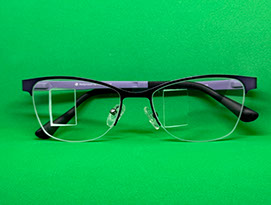
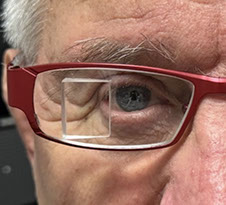
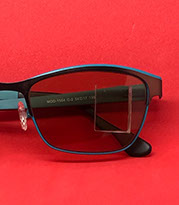
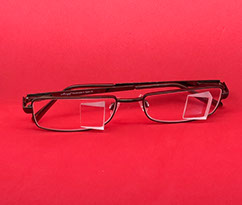
Expanding prisms: The most widely used are Palomar r© band prisms. These help expand the field and recover perception of the lost visual field. Continued use also produces visual stimulation that can aid in functional recovery.
Visual exercises: These can improve eye coordination, visual perception, fusion, and eye movements such as saccades or smooth pursuit. They can also improve the lost visual field through specific stimulation programs.
The goal of these treatments is to restore the patient's autonomy, allowing them to perform all daily tasks such as walking, orienting themselves, reading, driving, etc.
Can hemianopia be recovered?
Neuroplasticity can be considered the brain's ability to reorganize its neuronal connectivity patterns and readjust its functionality. This phenomenon is influenced by several factors, such as the cause of the problem, the patient's age, the duration of the stroke, the presence or absence of a relationship with other cognitive or mobility problems, etc.
Currently, we find hemianopia patients who, after being treated with Palomar prisms and completing the Palomar online exercise program, achieve a functional recovery of their lost visual field.
Where can I receive treatment?
Typically, for a rehabilitation program, the patient must come to the center on certain days to perform exercises with machinery and do some easy-to-follow exercises at home. This can often be a challenge for patients due to time and distance limitations. To address this, Dr. Palomar has developed the Palomar online vision therapy platform, designed for the remote treatment and rehabilitation of patients with hemianopia or sectoral visual field loss. This way, once the patient has been examined, either in person or remotely, they can begin a vision rehabilitation program at home, requiring only a tv set and a computer with an internet connection.
Every patient gets a different customized program based on his or her clinical situation.
Palomar Centers are the one and only Eye Centers worldwide to offer this type of treatment, treating patients from all over the world.
Right homonymous hemianopia
Left homonymous hemianopia
Related links: